A mirror feels like the clearest tool in your room, yet the reflection can hide more than it shows. Makeup looks sharp in one mirror and dull in another. Skin tone shifts for no clear reason. Small distortions hide or exaggerate details, and this changes the way you judge your makeup long before you notice the problem.
Your face looks familiar every day, so even a flawed mirror feels normal. This becomes obvious when pretty girls with red hair or anyone who depends on accurate colour sees tone and contrast shift without warning. Light bends in the wrong direction, edges warp and subtle distortions influence how you apply makeup and how confident you feel once you step into natural daylight.
Why Your Reflection Isn’t Always Accurate
A mirror sends your image back to your eyes, but the accuracy of that reflection depends on the shape, thickness and coating of the glass. Small irregularities shift the rays it returns, even when the surface looks flat. These changes alter the proportions you depend on, and the effect becomes clear only in natural daylight.
Distance affects accuracy as well. A slight curve becomes clear when you stand close, and the distortion spreads when you step back. This shifts your sense of symmetry and turns simple makeup tasks into guesswork.
The Brain’s Role in Interpreting Reflections
Your brain adjusts everything you see. It fills gaps, balances proportions and changes brightness to stabilise the image. When a mirror distorts your reflection, your brain attempts to correct it, but the result rarely matches reality. A stretched or compressed version of your face starts to feel normal, and a true-to-scale mirror suddenly makes familiar features look different.
Common Types of Mirror Distortion
Distortion appears in more forms than people expect. Some types are subtle, while others show up instantly. Once you understand them, you recognise the cause of many makeup frustrations.
Curved Mirrors (Concave vs Convex)
Concave mirrors pull the centre inward and make central features sharper. Convex mirrors push the centre outward and flatten the face. Both styles alter how you judge contour, blush and detail around the eyes. They suit decorative use but create problems for accurate makeup.
Poor Manufacturing or Thin Glass
Thin glass bends easily and loses stability over time. Even a slight bow stretches your face towards the edges. Your jawline looks uneven and one cheek may seem higher. This creates incorrect shading, mismatched lines and a false sense of symmetry.
Uneven Backing or Imperfect Silvering
Mirror coating controls how evenly the surface reflects. An uneven layer creates small areas where the image bends or dulls. Many people blame the lighting or technique when something feels off, yet the backing often causes the issue. Flaws in the reflective layer alter contrast and outline in ways you don’t spot straight away.
Common signs include:
-
Subtle dark zones near the edges
-
Tiny waves across the surface
-
Colours that look slightly cooler or warmer in certain spots.
These issues mislead your eye, distort skin tone and affect how you judge foundation, concealer and precise lines.
How Lighting Interacts With Mirror Distortion
Lighting shapes the way your reflection appears. Distortion grows stronger or weaker depending on brightness and angle. Two mirrors with the same glass produce different results under different light. Makeup depends on accurate shadows and highlights, and poor lighting exaggerates small flaws.
Brightness Levels and Face Proportions
A dim mirror softens texture and lowers contrast, so makeup looks smoother than it is. Bright light has the opposite effect and sharpens every detail. When brightness differs from natural daylight, you adjust makeup for conditions that don’t match real life.
Direction of Light
Light direction shapes how shadows fall across your face. Even a perfect mirror cannot compensate for the effect of angled lighting. The reflection changes depending on where the light hits first.
Effects of different angles:
-
Top lighting deepens under-eye shadows and makes your face look tired.
-
Side lighting creates uneven contrast and changes perceived symmetry.
-
Backlighting hides texture but causes blending errors.
These differences explain why your makeup sometimes seems perfect at home but uneven outside. Your mirror builds the foundation of your perception, but the light builds the structure around it.
Makeup Errors Caused by Distorted Mirrors
A mirror that bends lines or shifts colour affects every stage of makeup. You follow the reflection as if it is accurate, then discover inconsistencies later.
Uneven Foundation and Contour Mapping
Distorted proportions mislead your sense of placement. Foundation looks blended in one mirror, then patchy in daylight. Contour lines appear balanced indoors, then too sharp or too low outside.
Eyeliner, Brows and Detail Work
Small distortions ruin precision. A line that seems straight suddenly looks uneven in photos. Brows appear symmetrical under one mirror and mismatched under another.
Colour Perception Problems
Lighting and distortion shift undertones. Blush looks soft and warm at home but bold outside. Lip colour appears muted indoors, then too bright in public.
How to Identify a Distorting Mirror at Home
You can test your mirror quickly and confirm whether it alters your reflection. These checks reveal problems that often stay unnoticed:
-
Look at a straight object in the mirror and see if it bends.
-
Move closer and farther to check whether your face shape changes.
-
Compare the reflection with the front camera on your phone.
-
Tilt the mirror to see if distortion shifts across the surface.
-
Check the edges for colour changes or faint waves.
If the mirror fails several tests, it likely distorts your makeup. A stable and accurate mirror prevents these issues and gives you reliable feedback.
What Makes a Mirror “Makeup Accurate”
A makeup-accurate mirror stays stable and reflects your face without bending lines. It also maintains natural colour so you can judge tone and detail with confidence.
High-Quality Glass and Thick Backing
Thick glass holds its shape. It resists bending and maintains a flat surface over time. Makeup looks consistent day after day because the mirror stays true.
Consistent Silvering or Aluminium Coating
A strong reflective layer creates an even image. You see accurate contrast and colour without patches or waves.
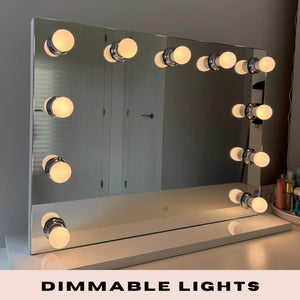
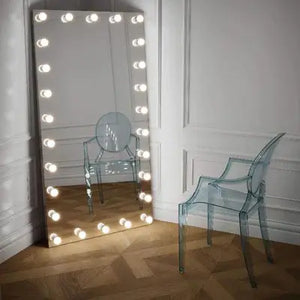
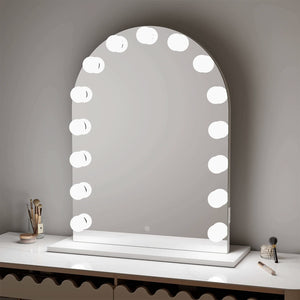
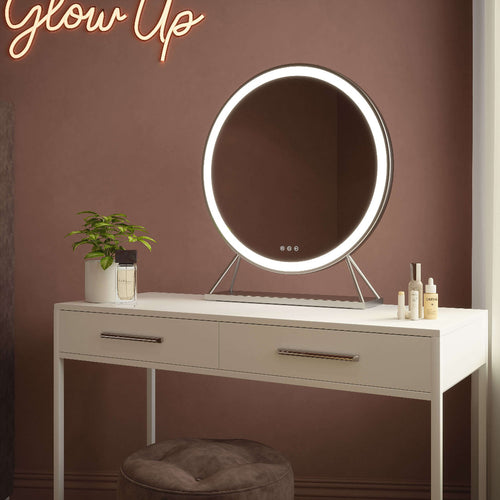
True-Colour LED Lighting Setup
Neutral white LED light offers clarity. It shows texture, tone and undertones as they appear in natural daylight.
A Clear Reflection Starts With the Right Tools
Your mirror shapes your daily makeup decisions. A distorting surface changes your sense of symmetry, colour and texture. Accurate makeup begins with an accurate reflection. The right mirror removes guesswork and gives you clarity that holds up in every light.
Liquid error (sections/article-template line 192): Invalid form type "70\n", must be one of ["product", "storefront_password", "contact", "customer_login", "create_customer", "recover_customer_password", "reset_customer_password", "guest_login", "currency", "activate_customer_password", "customer_address", "new_comment", "customer", "localization", "cart"]

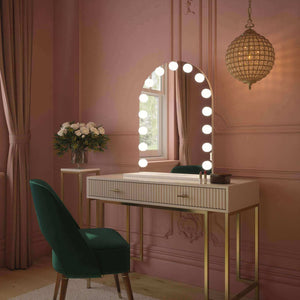
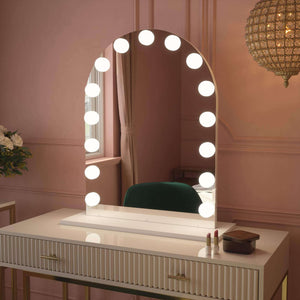
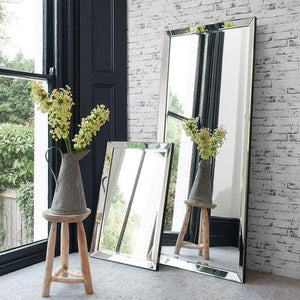

 Angelina Full Length Arch Hollywood Mirror 160 x 60cm
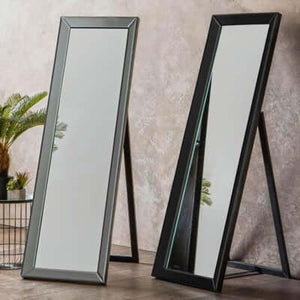
 Angled Luna Mirror-Cheval Black
 Angled Luna Mirror-Cheval Silver
 Art Deco Overmantle Mirror in Grey 105cm x 86.5cm