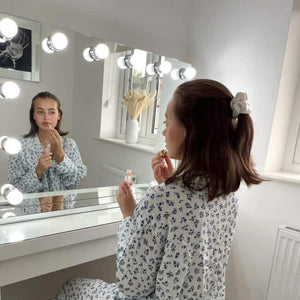
Bad lighting doesn't really ruin how you look, but it does give you a false sense of security as you look in the mirror. This is why you need to always bear in mind that the finish you see at your dressing table with bad lighting is different from what people see in the daylight. This proves that lighting is a very important consideration when doing your makeup.
Warm-toned bulbs flatter skin but they do suppress redness and blotchiness. Both are things you need to address if you want your makeup to look flawless. As for cool white bulbs, texture is revealed but it makes natural tones look ashy. This is the reason why people putting on makeup with a cool white bulb tend to have warmer makeup as a result. Both warm-toned and cool white bulbs don't give you an accurate picture. This is why foundation is very important.
Colour Temperature Decides Your Foundation Shade
Household bulbs are very different from natural daylight. The difference is so great that it can change the apparent undertone of a foundation entirely. Take note that warm bulbs sit around 2700K, while daylight runs between 5000K and 6500K. This difference shifts warmth and flips a correct shade match into a visible mismatch as lighting changes depending on the time of day.
A good makeup application should be based on factors like this. Unfortunately, most product reviews do not acknowledge this. And this is why it's the first thing that professional artists address as soon as they notice that a client's skin looks different in the chair with good lighting compared to how it looks on camera with varying lighting.
Overhead Bulbs Create Shadows That Push You Toward Heavier Concealer
It's never good to blindly trust light sources that sit above the mirror. This is because it pushes people to reach for more concealer to layer over a problem that lighting has created.
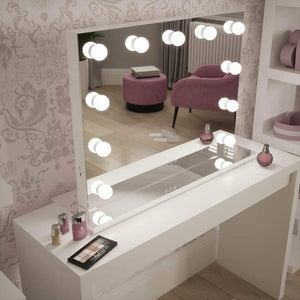
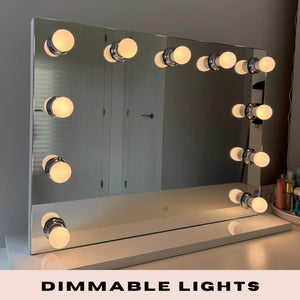
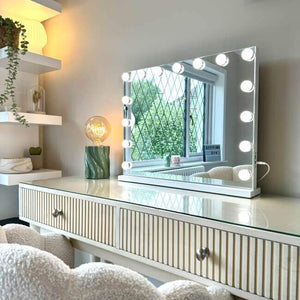
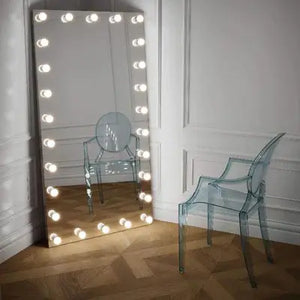
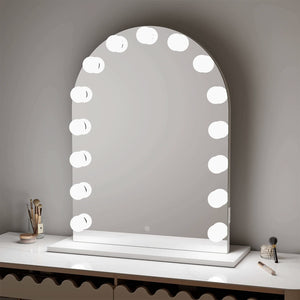
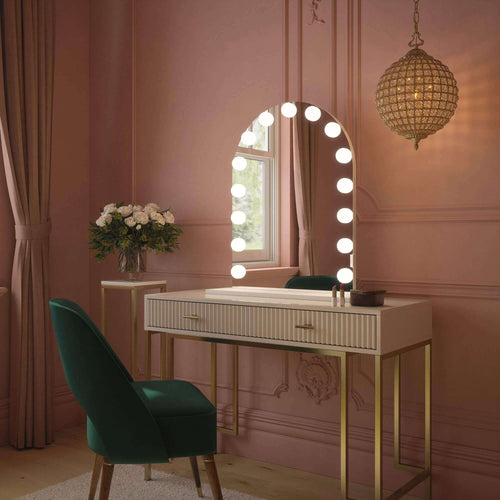
Studio makeup artists hang mirrors with bulbs around the entire perimeter not for atmosphere but because a single overhead source makes a face look hollow on camera, and they needed to know that before the director called action. The perimeter arrangement surrounds the face with even light rather than directing it from one angle. That removes the shadow at its source; without it, you are applying a product in response to an illusion.
What Accurate Light Reveals on Your Skin
Correct the temperature and the position, and blending edges become readable in ways warm domestic lighting actively hides. You can see where foundation meets the hairline, where contour sits too high on the cheekbone, and where concealer has creased from over-application, the details that are invisible under a warm bedroom bulb but obvious to everyone who looks at you under office lighting or in afternoon daylight.
The formulation is rarely the problem, but you will not know that if the light has been misleading you for the past twenty minutes. Most foundation shade mismatches are an assessment problem, not a formulation one.
Magnification Has One Job, and Foundation Is Not It
Vanity mirrors with 5x or 10x magnification are useful for individual lash application, precise liner work, and brow grooming. For building a base, the scale actively distorts; nobody views you at 10x in real life, and what reads as correct at that distance rarely holds up in a standard mirror across the room. Use it for close detail work, then step back before you set anything. Over-drawn liner and over-filled brows are almost always a magnification problem, not a technique one.
The Setup That Stops the Problem Before It Starts
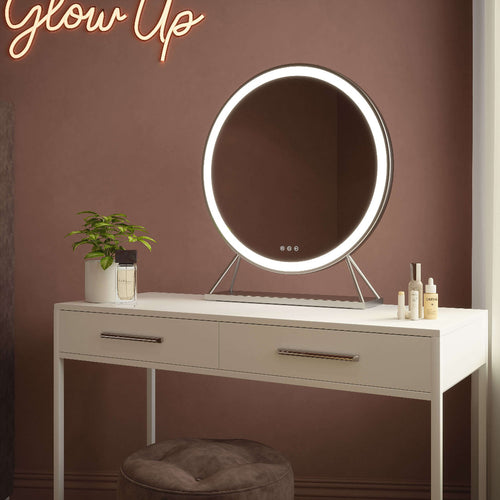
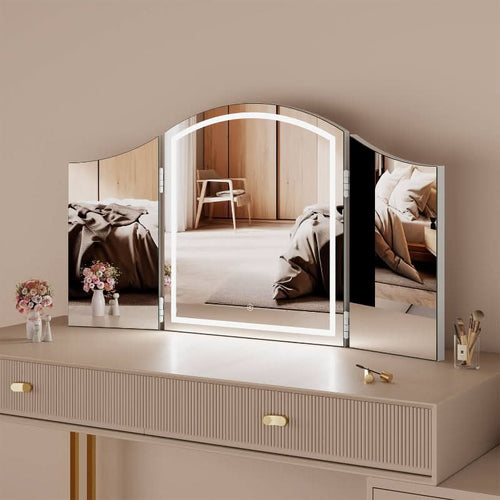
Width matters more than most people expect; anything narrower than 80cm clips the peripheral lighting and reintroduces shadow at the edges of the face. Position the mirror at eye level, make it your primary light source rather than a supplement to whatever overhead fitting is already in the room, and face it directly. Tilting a mirror upward flatters proportions rather than showing them accurately, which is the opposite of what the setup is for.
Get the light right and the reading you get at that table is the same one everyone else gets when they look at you. That is the only standard worth setting it up to.
Liquid error (sections/article-template line 192): Invalid form type "43\n", must be one of ["product", "storefront_password", "contact", "customer_login", "create_customer", "recover_customer_password", "reset_customer_password", "guest_login", "currency", "activate_customer_password", "customer_address", "new_comment", "customer", "localization", "cart"]

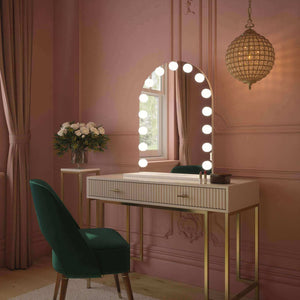



 Alicia Hollywood Mirror 60cmx80cm
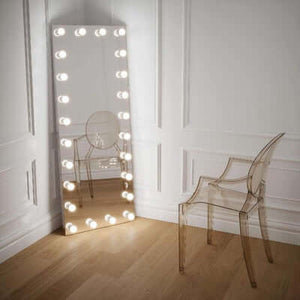
 Angelina Full Length Arch Hollywood Mirror 160 x 60cm
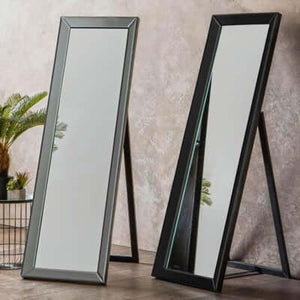
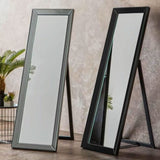 Angled Luna Mirror-Cheval Black
 Angled Luna Mirror-Cheval Silver