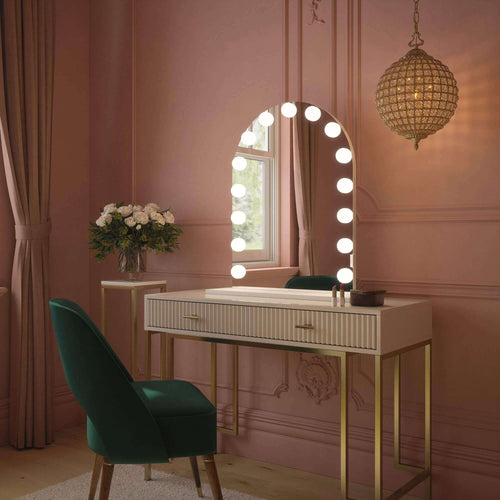
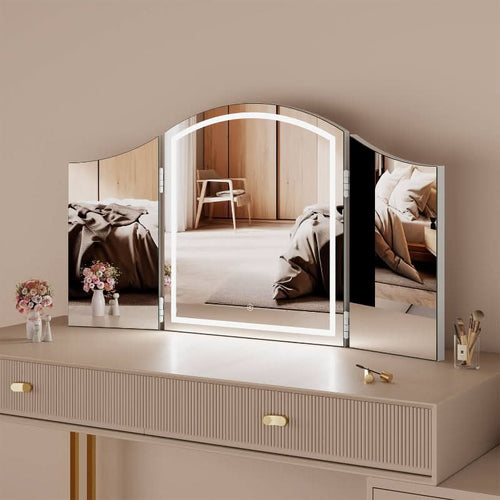
Most people think getting their lighting right means finding a nice pendant and calling it done. It doesn't.
Good home lighting is a layered system, and the overhead fixture is just the starting point. The rooms that actually feel warm, flattering, and well put-together are the ones where every level of light, from the ceiling down to the bedside, has been thought about deliberately. If your space still feels a little flat despite looking great on paper, the lighting layers you haven't sorted yet are almost certainly why.
Here's what it actually takes, and where most rooms go wrong.
1. Your Ceiling Light Is Working Harder Than It Should
There's a widespread assumption that one good overhead fixture covers the room. It doesn't, and it was never meant to.
A single source from above creates flat, directionless illumination. Everything is visible, but nothing feels inviting. Think about the difference between a well-lit restaurant and a supermarket: both are bright, but only one makes you want to stay. The restaurant uses multiple layers. The supermarket uses one.
Getting your home ceiling lights right starts with treating the ceiling fixture as the anchor, not the entire scheme. For comfort and relaxation in living rooms and bedrooms, 2700K to 3000K creates a calm, welcoming atmosphere and works beautifully with layered lighting like table lamps and floor lamps.That means your overhead should be warm-toned, dimmable, and chosen to set a mood, not just fill the room with brightness.
Brushed brass and antique gold are the standout finish choices for 2026, bringing an instant sense of warmth and luxury to a space. These metals look aged, giving the feeling they've been there forever and that the light was made for that room.A warm-finished fixture paired with a 2700K bulb on a dimmer already puts you ahead of most rooms before you've added anything else.
The ceiling fixture sets the emotional temperature of the room. Everything below it follows that lead.
2. The Colour Temperature Number on That Box Actually Matters
Here's the thing nobody explains when you're standing in the lighting aisle: the Kelvin number changes how your whole room feels, not just how bright it is.
Warm light (2700K–3000K) is what you want for living rooms, bedrooms, and anywhere you relax. Warm light in this range promotes relaxation and supports natural sleep cycles, making it ideal for bedrooms and living rooms where you unwind.Cool light (4000K and above) is sharp and alerting, which is great for a home office or kitchen but actively works against a cosy, flattering atmosphere in a lounge or bedroom.
Most homes are running the wrong Kelvin in the wrong rooms without realising it. Bedroom bulbs above 3000K suppress melatonin and make sleep harder. The days of a single central ceiling light running at fixed brightness are, by any modern standard, over.The fix is simple: check the Kelvin rating on every bulb in your bedroom and living room right now. If anything reads above 3000K, swap it.
It is very important that all light sources in the same room share the same colour temperature. Mixing Kelvin values across fixtures throws the design off balance and makes a room feel uncomfortable even when nothing else is obviously wrong.Keep your warm rooms consistently warm, and the difference is immediate.
One number on a box. Enormous difference in how the whole room feels.
3. Table Lamps Are Room Jewellery Now, Not Just Light Sources
If you still think of a table lamp as something practical that came with a bedroom set, 2026 has officially moved on without you.
Table lamps have graduated to become room jewellery. They are sculptural, emotional pieces that define the mood of a space even when switched off. The stark minimalism of the past decade is softening into nostalgia, tactile comfort, and organic imperfection.The lamp on your bedside table or sideboard is doing design work around the clock, not just when it's switched on. Choosing something flat and generic is a missed opportunity every single day.
This is exactly where sourcing unique table lamps pays off most visibly. People are craving pieces with character, depth and a story. Ultra-minimal or purely neutral lighting that doesn't connect with the rest of a room's personality feels less inspiring. Lighting should not just illuminate a space but evoke feeling and atmosphere.A hand-thrown ceramic base in a deep earthy tone, a sculptural form in frosted glass, a vintage brass stem with a linen shade that diffuses rather than directs. Any of these transforms a functional object into something that earns its spot.
In 2026, the emphasis is firmly on mood before machinery. Muted tones, diffused light, and comforting materials such as ceramic, fabric, and softly finished metals help create relaxed interiors that feel restorative rather than merely decorative. The test worth applying before any lamp purchase: does this piece earn its place on the surface when it's switched off? If yes, it's working as both lighting and decor.
Placement matters just as much as the lamp itself. Two matching lamps flanking a bed or sofa confirm that the room was thought about. One lamp in the corner suggests it wasn't quite finished.
4. The Layers Have to Talk to Each Other
Here's where it comes together, and where a lot of otherwise nice rooms still fall short.
A ceiling fixture and a table lamp chosen independently, in different finishes and different Kelvin ratings, will always feel slightly disjointed. The room reads as assembled rather than designed. Getting the layers to work together means making deliberate choices at each level that respond to each other, not just to individual taste in isolation.
The days of relying on a single overhead light are fading, replaced by a mix of floor and table lamps, wall lights, and accent lighting that add depth and warmth. Think sculptural table lamps on sideboards, discreet wall sconces framing a seating area, and statement pendants creating a soft glow rather than a harsh spotlight. Every source contributes something different. The overhead anchors the room. The table lamps add intimacy and character. Any additional accent sources fill the corners and eliminate the flat patches that a single source always leaves behind.
The practical approach is to establish your ceiling fixture first, settle on a finish family and Kelvin rating, and then select your table lamps in direct response to both. Warm metals and 2700K overhead? Your table lamps should sit in the same tonal world. Portable rechargeable lamps add a further layer of flexibility, moving from room to room, adding a cosy glow to darker corners, and bringing atmosphere to dining tables, mantels and bedside tables without any wiring commitment.Even a single cordless lamp, moved to wherever the room needs it that evening, counts as a genuine lighting layer.
When the layers align, the room stops feeling like a collection of individual purchases and starts feeling like a place you actually want to be in.
Frequently Asked Questions
Does it really make a difference what finish I choose for my ceiling light?
More than most people expect. Finish affects how a fixture reads in the room as much as its shape does. Brushed brass and aged gold finishes consistently outperform cooler metals in living rooms and bedrooms, because they reflect light softly and bring a warmth that instantly makes a space feel more considered.Match your ceiling fixture finish to at least one other metal in the room, and everything quietly pulls together.
What Kelvin rating should I use in my bedroom?
2700K, full stop. Anything higher works against relaxation and disrupts sleep, regardless of how nice the fixture looks.
How many light sources does a living room actually need?
More than you probably have right now. A living room works best when the ceiling fixture is supported by a floor lamp near the sofa, a table lamp on a side table, and perhaps a wall sconce near where you read. When several light sources work together, the overhead can do its job without making the room feel like an office. The practical starting point is to count your current sources and add one. A single good table lamp placed deliberately will immediately show you why the layered approach matters, and once you've seen the difference, you won't go back to relying on the ceiling alone. The goal isn't maximum brightness. It's warmth, depth, and a room that shifts with the evening rather than staying fixed at one flat level.
Is it worth spending more on a statement table lamp?
For the right piece, yes. A lamp with a sculptural base and a quality shade that diffuses rather than directs light functions as a design feature whether it's switched on or off. In 2026, table lamps are designed to look like art objects first and light sources second, meaning one strong piece can anchor a room's aesthetic without requiring anything else to change around it.
The Room You'll Actually Want to Come Home To
Good lighting doesn't shout for attention. It just quietly makes everything else in the room look better, and everyone in it feels more comfortable.
The homes that get this right aren't necessarily the most expensively decorated ones. They're the ones where someone decided that the ceiling fixture, the colour temperature, and the lamp on the sideboard all deserved a proper decision rather than a quick default. That level of thought is available to any room, at any budget, starting with the very next bulb you buy.
Liquid error (sections/article-template line 192): Invalid form type "88\n", must be one of ["product", "storefront_password", "contact", "customer_login", "create_customer", "recover_customer_password", "reset_customer_password", "guest_login", "currency", "activate_customer_password", "customer_address", "new_comment", "customer", "localization", "cart"]




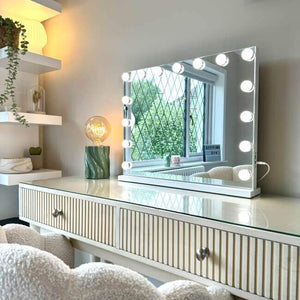
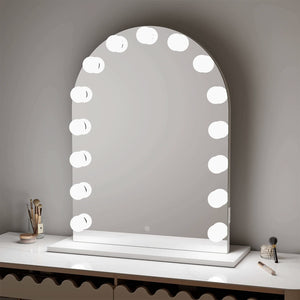
 Alicia Hollywood Mirror 60cmx80cm
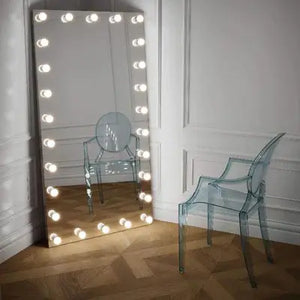
 Angelina Full Length Arch Hollywood Mirror 160 x 60cm
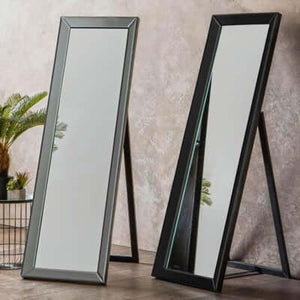
 Angled Luna Mirror-Cheval Black
 Angled Luna Mirror-Cheval Silver