Get bridal makeup lighting wrong and the face that looked perfect in the mirror steps outside a shade orange in the ceremony photos. Most brides audition their makeup artist carefully, then sit down on the morning itself wherever there happens to be a plug socket. That chair, and the light falling on it, quietly decides how the base and blush will look for the rest of the day.
Getting it right costs almost nothing. It mostly means knowing which light to trust, where to put the mirror, and what to clear out of the way before the artist arrives.
- Daylight-balanced light, around 5000K, shows makeup closest to how it will look outdoors and in photographs.
- Always face your light source. Sitting with a window behind you, or under a ceiling spot, throws shadows exactly where you do not want them.
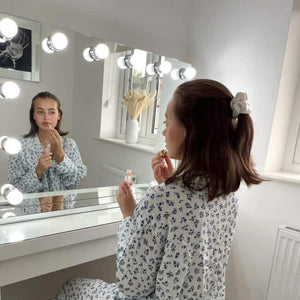
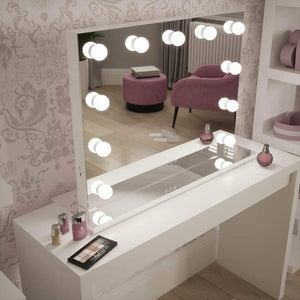
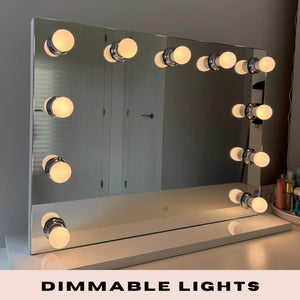
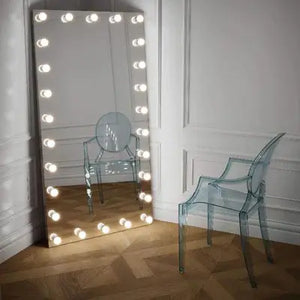
- A lit vanity mirror gives consistent, front-on light at 7am in December as well as 11am in July.
- Check the CRI (colour rendering index) of any bulb you trust your foundation match to. 90 or above is the working standard.
- Keep the mirror corner tidy. It is the most photographed and filmed spot of the entire morning.
Why the light matters more than the mirror
Every light source has a colour temperature, measured in kelvins. A standard warm bulb sits around 2700K and pulls everything towards amber. Midday daylight sits between 5000K and 6500K and is far cooler. Makeup matched under one can look a full shade different under the other, which is why a foundation that seemed perfect in a dim hotel room can turn unmistakably orange on the church steps.
Colour accuracy is the second half of the problem. Cheap LED bulbs often have a low colour rendering index, meaning they physically cannot show certain reds and pinks correctly. Skin looks greyish, blush disappears, and the artist compensates by adding more product than the daylight version of you needs, which is why professional makeup lamps are rated CRI 90 or higher.
A bride is made up at 7.30am in a north-facing hotel room lit by two warm bedside lamps. The artist matches her base to what she sees, roughly 2700K light. At 1pm the couple are outside in 5500K daylight for the ceremony. The undertone mismatch that was invisible in the bedroom is now in every single photograph. No amount of retouching fixes a foundation shade across four hundred images.
Window, Hollywood mirror or hotel bathroom: what each light does
On the morning itself you will usually have three options, sometimes in the same room. They are not equal.
| Light source |
Typical colour temperature |
What you will actually see |
Worth trusting? |
| North-facing window, indirect daylight |
5000 to 6500K |
The most honest preview of how you will look outdoors |
Yes, the reference most artists prefer |
| Lit vanity mirror with dimmable LED bulbs |
Adjustable, usually 3000 to 6000K |
Even, front-on, shadow-free; consistent whatever the weather |
Yes, set to its daylight mode |
| Hotel ceiling spots |
2700 to 3000K |
Warm cast, shadows under eyes, nose and chin |
No, top-down light distorts everything |
| Bathroom mirror strip |
Varies wildly, often one harsh tube above the mirror |
Downward shadows, unpredictable colour |
Only as a last resort |
The strongest setup combines the first two. Place the makeup station beside the largest window, angled so the daylight lands on your face rather than the mirror, and use a lit mirror as the constant. A winter wedding or an early ceremony is precisely where bulbs around the glass stop being a luxury and start being the only reliable light in the room.
Set up the room as if it will be filmed, because it probably will be
The getting-ready hour has become a filmed part of the day in its own right. Around a third of UK couples now book a videographer, according to Bridebook's wedding industry research, and the same guide puts the average cost of a wedding film at £1,514. Couples who go further and invest in luxury destination wedding videography, whether they are marrying in the Cotswolds or on a clifftop in Santorini, often plan the makeup chair placement with their filmmaker in advance, because those quiet frames of a bride at the mirror are usually the opening scene of the entire film.
The camera wants the same thing your makeup artist wants: you, near the window, facing soft light. What it does not want is everything else that accumulates in a getting-ready room by 9am. Breakfast trays, carrier bags, phone chargers and a clothes rail of bridesmaid dresses in dry-cleaning plastic will all sit in the background of images you keep forever.
Hitched's National Wedding Survey put the average UK wedding at £21,990 in 2025, and a decent share of that spend converges on this one corner of one room: the dress on its hanger, the flowers in their box, the hair and makeup team at work. Give that corner ten minutes of staging the night before and every supplier you have paid for performs better in the same frame.
Sort the running order the night before as well. Most artists block out roughly an hour for the bride's makeup and another for hair, before anyone touches the bridal party. If the photographer arrives for the last forty-five minutes of that window, the finishing touches, not the base layers, are what end up on camera. Agree the sequence with your artist and filmmaker beforehand rather than negotiating it on the morning.
The night-before checklist
Five minutes with this list saves the whole morning:
- Choose the chair now: beside the biggest window, facing the light, with a socket within reach of the mirror.
- Set the mirror bulbs to their daylight setting and check nothing flickers.
- Clear the surfaces within two metres of the mirror; one tray for brushes and products is enough.
- Hang the dress and set aside the shoes and jewellery in one place, out of the walkway but easy to reach for detail shots.
- Charge phones overnight somewhere else, so no cables trail across the dressing table.
- Do the final makeup check at the window in daylight, not under the room lights, before you leave the chair.
FAQ
What colour temperature is best for bridal makeup?
Aim for daylight-balanced light around 5000K, with bulbs rated CRI 90 or higher. That combination previews your makeup closest to how it will look outdoors and in photographs. Warmer settings around 2700K are flattering to sit in but unreliable to match foundation under.
Should I face the window or the mirror while my makeup is done?
Both, ideally. Position the chair so the window light falls on your face while you look into the mirror. Never sit with the window behind you: the mirror will reflect the glare while your face sits in shadow, and the artist works against the light all morning.
Does poor lighting really show in wedding photos and film?
Yes, in two ways. Makeup matched under warm or low-CRI light can sit a visible shade off in daylight, which follows you through every image of the day. And the getting-ready room itself is filmed: harsh top-down light and a cluttered mirror corner are the first two things a film crew has to work around on a wedding morning.
Sources: Hitched, National Wedding Survey (published January 2026), average UK wedding cost 2025; Bridebook, UK wedding videography price guide (share of couples booking a videographer and average videography cost).
Liquid error (sections/article-template line 192): Invalid form type "57\n", must be one of ["product", "storefront_password", "contact", "customer_login", "create_customer", "recover_customer_password", "reset_customer_password", "guest_login", "currency", "activate_customer_password", "customer_address", "new_comment", "customer", "localization", "cart"]

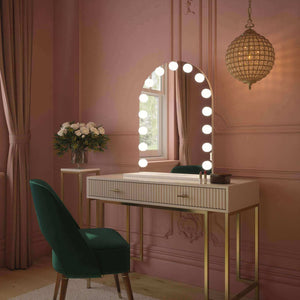

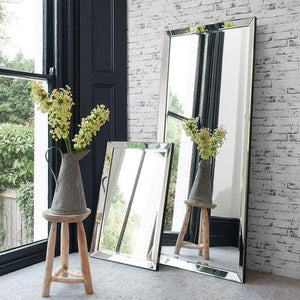

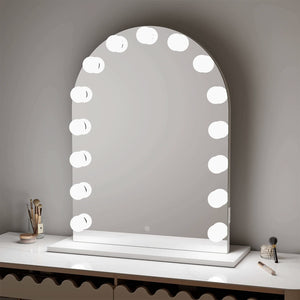
 Alicia Hollywood Mirror 60cmx80cm
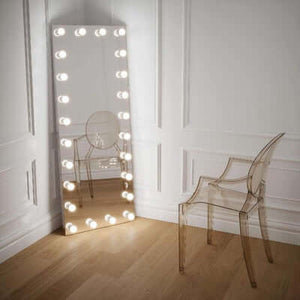
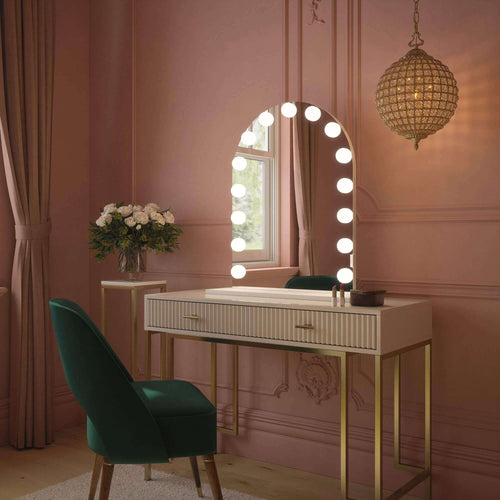
 Angelina Full Length Arch Hollywood Mirror 160 x 60cm
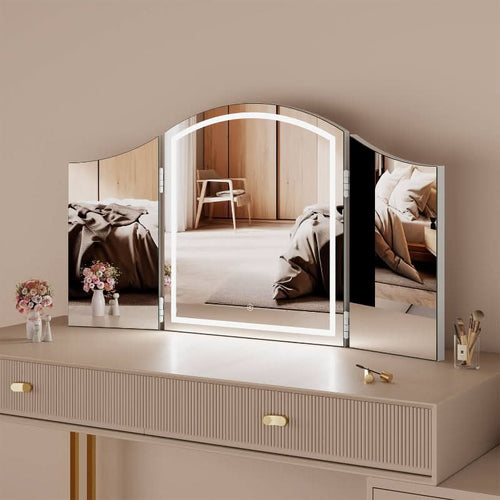
 Angled Luna Mirror-Cheval Silver
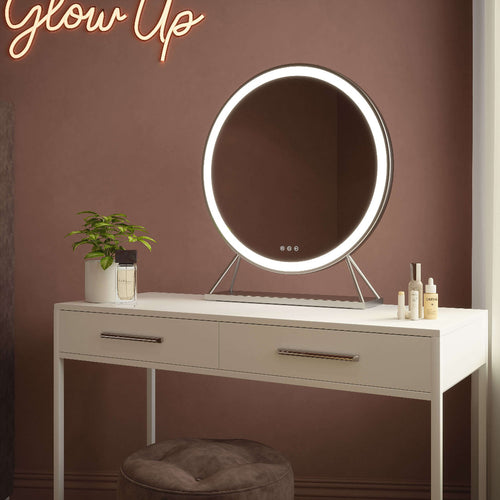
 Anne Round Hollywood Mirror Gold 60x67CM