For most of us just starting out with wigs, though, this choice is arcane jargon. What's going to make the biggest difference to your life is right in front of your eyes, but you can't see it. That's why we'll take you through the main cap types and what each one's best for here.
Cap construction: why it matters more than the hair
The cap construction is everything. Regardless of other styling techniques applied on top, the foundation determines whether you succeed in creating a natural look.
For example, a hard-front cap typical of low-cost wigs has a sewn fabric edge that rests against your forehead. It's impossible to hide that line. You can't adapt it, you can't make it resemble skin, and whenever light shines straight onto your face, it's blatantly obvious you're wearing a wig.
Lace front caps solve this problem along your hairline. Two to three inches of the front section of the cap consists of ultra-fine mesh lace, with every single hair being individually hand-tied into that lace. After you've trimmed that lace and pressed it flat against your skin, it will be practically invisible against your forehead. This results in the impression that your hair is growing naturally from your scalp.
A monofilament top enhances this realistic effect at your parting. The cap will feature a delicate, skin-colored panel at the crown with each hair being hand-tied into the mesh. Because of the individual tying of each hair, instead of them being sewn together, your hair will be able to move in multiple directions - just like your real hair. You want to part your hair to the left, right, or in a diagonal? It will work.
Full lace caps will work similarly to a monofilament top but across the entire cap. You will have the most flexibility in styling your wig, at the same time, of course, a more sensitive handling of the cap material is required, and the product will also be more expensive. For everyday use, a lace front with a monofilament top fulfills most realistic needs.
The fiber decision: human hair vs. heat-friendly synthetic
This is a matter of budget and effort available. Human hair wigs look and feel the most natural because - well - you're using real hair. To the touch, they are indistinguishable from real hair which is why they're the preferred choice. This gives incredible confidence, right from the start. They can be cut, styled, permed or colored based on your needs and preferred tastes. However, just like real hair, it needs to be styled. So if you are less inclined to style your hair that likely means that real hair will not be the must-have choice for you. Real hair also means more washing and straightening. That said, with proper care, this could last a long time.
Premium heat-friendly synthetic fiber is a different calculation. It holds its style through washing - the curl or wave resets as it dries, no styling tools required. You can use heated tools on it, but at lower temperatures, typically under 350°F, to avoid melting the fibers. The initial style is locked in, which means less daily effort but also less spontaneity if you want to change things up.
For most first-time buyers, and for wearers dealing with hair loss from alopecia or medical treatment, heat-friendly synthetic in a lace front or monofilament cap hits a practical middle ground. The realism comes primarily from the cap and construction - not exclusively from the fiber type.
Density: where most buyers get it wrong
Hair density is seen through the percentage of hair that is present in your wig. 100% density can be said to be identical to a normal head of hair for many people. 120% is going to be somewhat more volume. 150% hair density starts to look kind of like an acting performance - a thick, flawless mass of hair that doesn't move like real hair and rests too uniformly on your head.
The instinct, especially for those who have been losing hair, would be to select as much hair as possible. This instinct will never support you. Over-density is among the most apparent signs for the reason exactly that real hair - although abundant in number - has variance, layers, and movement. A wig with 150% hair density has a cap-like appearance that reads unnatural in pictures as well as up close.
Choose between 100% and 120% for daily usage. The outline seems natural, the movement is more flexible, and face-framing becomes simpler.
Choosing a brand built for realism, not stage wear
Not every wig brand is striving for the same end result. Theater and costume wigs are all about drama, not subtlety - thick and dense, designed to be seen from far away. Those are fun, but they aren't going to pass for real hair on the street. Wigs intended for everyday use, particularly those marketed to women with hair loss, have to stand up to much closer scrutiny.
Celebrity-curated lines tend to filter out a lot of stage-quality issues because the designer's guiding principle is "Does this wig look real in the office?" For example, Paula Young's exclusive Jaclyn Smith wig collection is built around discreet, everyday realism, prioritizing scalp shading, silhouette, and wearable cap engineering rather than dramatic volume.
When it comes to evaluating the quality of any brand, look for specifics about cap construction in the product descriptions. If all you are seeing is color and length and there's no talk of lace or monofilament or cap type, then you're probably looking at a hard front cap.
Hairline prep: what to do before the first wear
A wig straight from the box has a few common tells that take about ten minutes to address.
The lace edge needs trimming. Most wigs come with a small amount of extra lace beyond the hairline. Trim it with small scissors, cutting close but not into the knots themselves. A scalloped cut following the natural hairline shape works better than a straight edge.
The knots at the hairline are often dark and visible. Plucking a few of the very front strands - literally pulling two or three hairs from the edge of the hairline - creates a slightly softer, more irregular boundary. This isn't about making the wig thinner; it's about breaking up the perfectly uniform density that reads as artificial.
Dry shampoo or a light matte powder on the part line breaks up the crisp, fresh look of a new wig. Real hair has texture and oil variation at the scalp. A quick spritz at the crown mimics that immediately. Baby hairs - the shortest, finest strands at the hairline - can be gently brushed out and laid flat with a soft toothbrush and light-hold product for the most convincing edge.
Parting and securing without glue
The parting line is the most obvious point of failure with wigs. A wig's part is a perfect, straight line that runs from your forehead to your crown. Real hair parts are slightly irregular. They shift with your hair growth during the day and never sit perfectly center on most heads.
Adding a slight diagonal or zigzag to your part that changes direction a few times is enough to break the mechanical look. Layered fall around your face and the part becomes less and less important as the hair falls into your face and over the part line.
The best way to ensure a wig stays in place and the part looks right for those who want to avoid using adhesive or melt spray, as well as anyone with sensory issues, is a velvet wig grip band. This band sits under the wig like a headband and the velvet texture provides enough friction to hold the wig in position under normal movement. Two bobby pins at the temple can hold the wig even if you go on a rollercoaster.
Sizes run from ultra-petite to average to ultra-large, and even the best frontal hairline will look wrong if the fit pushes the hairline up too high or scoots the wig back farther than it should. Most too-tight headaches or shifting-wig problems are the result of the cap being too small, not the lack of enough glue.
Color choices that read as real
A solid all-over single-process color, especially lighter shades, looks flat under direct light. Real hair (even if dyed to one base color) has variation: darker at the root, slightly lighter at the ends, with subtle tonal differences throughout.
Rooted or depth-shaded wigs build this in. The color is darker at the crown and transitions to a lighter tone toward the tips. That graduation replicates the natural scalp shadowing that makes hair look like it's actually growing from skin. Under sunlight, a monochromatic wig has a fabric-like uniformity that single-color doesn't escape no matter how well everything else is executed.
When choosing color, look for terms like "rooted," "shaded," "highlighted," or "bi-colored" in the product description. Even a subtle root shadow on an otherwise solid-color wig makes a significant difference in outdoor light.
Styling for movement, not volume
Natural-looking cuts on wigs are those that have some movement. Long layers around the face, slightly feathering at the ends, face-framing pieces that fall forward, all break the hard outline that gives wigs their silhouette.
Blunt-edge bobs, and helmet-shaped cuts reinforce the wig shape. They're defined by their outline, which is the one thing you're trying to avoid drawing attention to! This doesn't mean bobs are impossible - it means a bob with soft, slightly uneven ends and one or two face-framing layers works better than one that's precision-cut exactly the same length on every strand.
Over-brushing is a common culprit, especially with synthetic fiber. Over-brushing pulls at the wefts over time, stretches the cap, and creates frizz that doesn't brush back out. Finger-styling, using the pad of one or two fingers to guide direction rather than a brush, is kinder on synthetic wigs if you want to keep the wig looking "factory fresh" for as long as possible.
Washing should be done in cool water, with a gentle wig shampoo, and always air-dried on a wig stand with the hair flowing naturally. Don't scrunch, wring, or lay the wig flat while wet - all three distort the cap shape and flatten the fibers in ways that are difficult to reverse.
Realism is a technique, not a price point
The most realistic wigs may not necessarily be the priciest. It's mostly about the cap construction for the wearer's face, the density for a natural-looking silhouette, and about ten minutes of prep time before you wear it. The color you choose, if and how you part your hair, and how you style it for movement matter more to your final look than if you paid double for the synthetic fiber hair.
First things first, focus on the cap. Get the sizing accurate. Do the lace prep. The rest is just tweaking.
Liquid error (sections/article-template line 192): Invalid form type "53\n", must be one of ["product", "storefront_password", "contact", "customer_login", "create_customer", "recover_customer_password", "reset_customer_password", "guest_login", "currency", "activate_customer_password", "customer_address", "new_comment", "customer", "localization", "cart"]




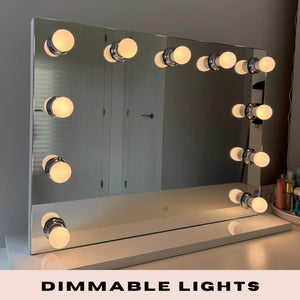
 Alicia Hollywood Mirror 60cmx80cm
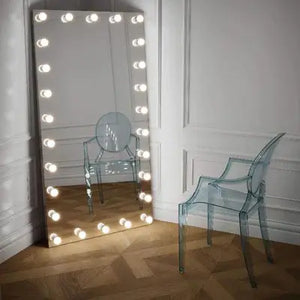
 Angelina Full Length Arch Hollywood Mirror 160 x 60cm
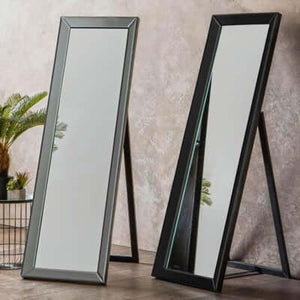
 Angled Luna Mirror-Cheval Black
 Angled Luna Mirror-Cheval Silver