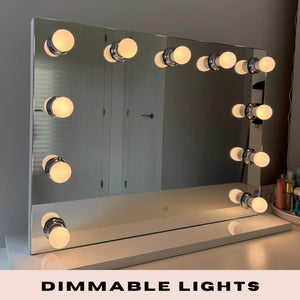
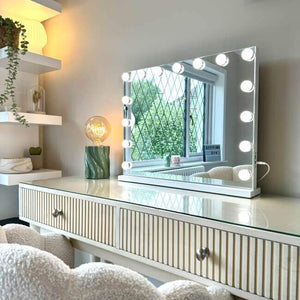
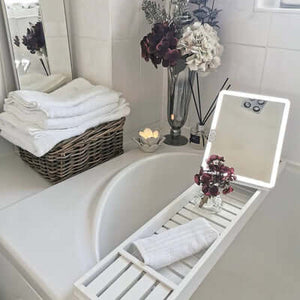
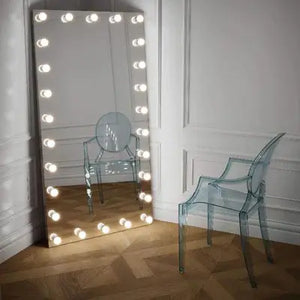
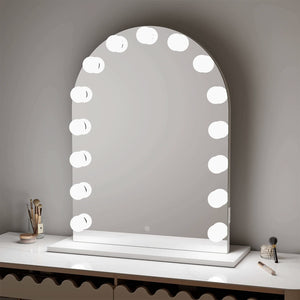
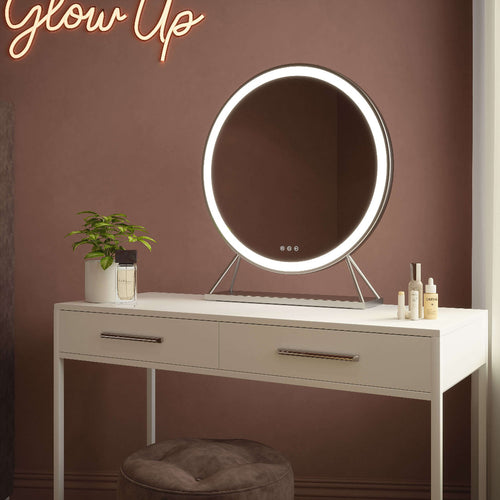
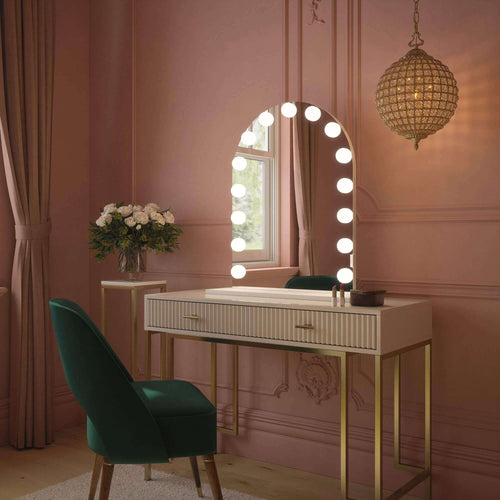
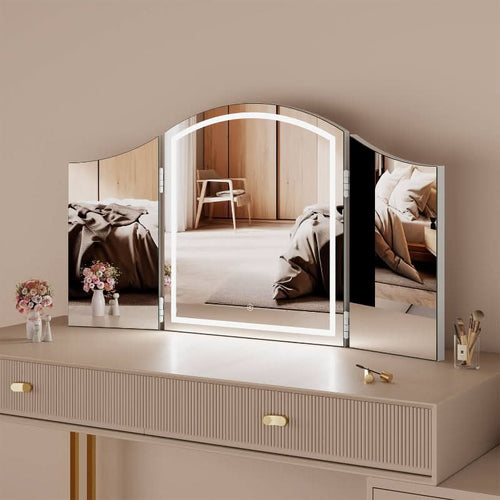
A vanity mirror seems like the easiest thing in the world to buy — until you open a browser and find yourself staring at forty of them. Big ones, small ones, ones ringed with bulbs, ones on stands, ones for the wall, some with warm light, some blindingly bright. Get it right and your dressing table suddenly feels like a proper glam corner. Get it wrong and you're stuck with something too small to be useful, too bulky for the table, or so harsh it makes your morning routine feel like an interrogation. A little homework before you order makes all the difference.
Start with where the mirror will go
Before you fall for a mirror's looks, work out where it's actually going to live. Measure your dressing table — its width especially, because a mirror with a wide base can eat up more surface than you'd think and leave nowhere for your bits and pieces.
Check the wall space too if you're thinking of a wall-mounted style, and have a look at where your nearest socket is, since almost all lighted mirrors need plugging in somewhere sensible. Think about chair clearance, and how much natural light the spot already gets. If you're working with a small bedroom or a compact dressing area, all of this matters even more — the perfect mirror in the wrong spot just becomes clutter you have to shuffle around.
Look closely at the product photos and angles
Here's where a lot of online mirror-buying goes sideways: people judge from one flattering front-on photo. A mirror can look wonderfully slim head-on and turn out to have a deep stand, a chunky base, a thick frame, or a row of controls you didn't spot.
So go hunting through the whole gallery. Check the side view for how far it sticks out. Check the back if there's a shot of it, especially for wall-mounted ones. Look for a close-up of the frame and any buttons or dials. When shopping online, look for product pages that show the mirror from more than one angle; richer visuals such as 360 spin product photography can help shoppers understand the frame depth, stand shape, controls, and overall proportions before ordering. The more angles a listing gives you, the fewer surprises when the box arrives.
Check the lighting features, not just the shape
The lighting is really the whole point of a vanity mirror, so it deserves as much attention as the frame. A pretty mirror with poor light is a daily frustration, while a plain one that lights your face evenly is a joy to use every morning.
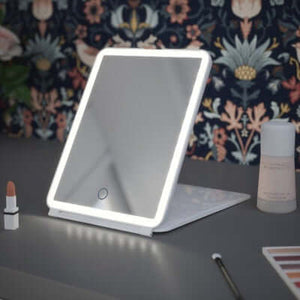
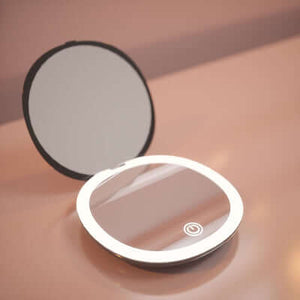
Look at what the bulbs actually do. Are they dimmable, so you can soften them for a relaxed evening and brighten them for detailed makeup? What's the colour temperature — warm light is cosy but can throw your foundation off, while cooler, daylight-style light is far more honest for makeup and skincare. Check for touch controls, and think about where the plug sits so the cable isn't trailing awkwardly across your table. For makeup, skincare, or doing your hair, even, accurate light is the thing you'll appreciate day after day.
Use visual references to understand scale
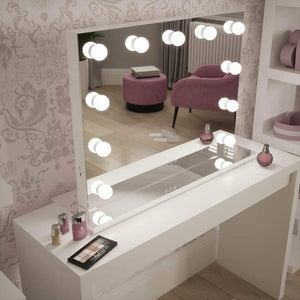
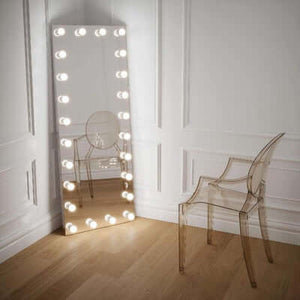
Even with good close-ups, it can be hard to picture how big a mirror really is until you see it in a room. That's where lifestyle photos earn their keep — a mirror shown on an actual dressing table, in a real bedroom, next to a chair, gives you a sense of scale a plain product shot never will.
Brands that sell visual home products often use digital content to show finishes and angles more clearly; examples of this type of product presentation can be found on the official website. If a listing includes a room shot or a short video, use it — seeing the mirror styled in a setup a bit like yours tells you far more than dimensions on their own, and helps you imagine it in your own glam corner before it turns up.
Read the reviews for the real-life details
The product description is there to sell the thing. The reviews are where you find out what it's genuinely like once it's on someone's table.
Skim past the glowing one-liners and read the middling reviews properly — that's where the useful stuff hides. People will tell you if the lights are dazzling or a bit dim, if it wobbles, if it felt flimsy, if it arrived badly packed, or if it was a squeeze on a small dressing table. Photos left by other buyers are especially handy, since they show the mirror in normal bedrooms under normal lighting, not in a perfectly styled studio shot.
Think about delivery, setup, and returns
A mirror is fragile and often a bit bulky, so it's worth a moment of the boring practical stuff before you commit. Check how it's packaged and whether the reviews mention it arriving safely.
Look at whether it's ready to go or needs a bit of assembly, and if it's wall-mounted, what's involved in getting it up. Double-check the dimensions one last time against your space. And read the returns policy before you buy, not after — sending back a big, breakable item is a faff, so you want to know the window and who covers the postage if it's not right.
Final thoughts
Choosing a vanity mirror online is far less of a gamble when you slow down and check a few things first: where it'll go, how it's lit, what the photos really show, what other buyers say, and how it'll arrive. Do that, and the mirror that turns up is much more likely to be the one you pictured — bright, the right size, and exactly the finishing touch your dressing table needed.
Liquid error (sections/article-template line 192): Invalid form type "6\n", must be one of ["product", "storefront_password", "contact", "customer_login", "create_customer", "recover_customer_password", "reset_customer_password", "guest_login", "currency", "activate_customer_password", "customer_address", "new_comment", "customer", "localization", "cart"]

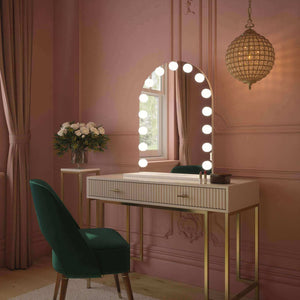

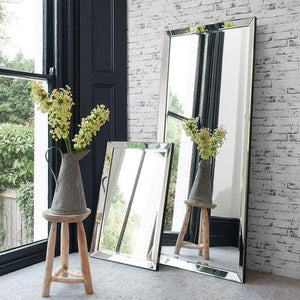

 Alicia Hollywood Mirror 60cmx80cm
 Angelina Full Length Arch Hollywood Mirror 160 x 60cm
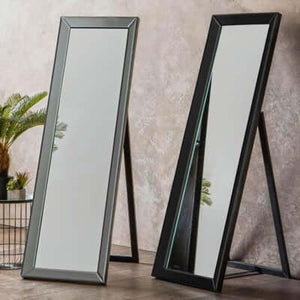
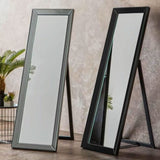 Angled Luna Mirror-Cheval Black
 Angled Luna Mirror-Cheval Silver